
✦FedEx Delivery1–3 day delivery across the U.S.Free on orders over $200

Compound Comparison

BPC-157 vs TB-500: The Research Comparison

Two compounds routinely sold as a pair, with different origins, different mechanisms and different kinds of evidence

·By Adam Reeves · Research Editor, Eppix Labs

BPC-157 and TB-500 are the two most commonly paired compounds in tissue-repair research, and they are frequently discussed as if they were variants of the same thing. They are not. They come from different biology, act through different proposed mechanisms, and their evidence bases differ in a way that matters when you decide which one to work with.

This comparison sets both out side by side. Both compounds are supplied for in-vitro laboratory research only, and nothing here is dosing, medical or legal guidance. Individual sourcing guides are at buy BPC-157 in the US and buy TB-500 in the US.

Where each comes from

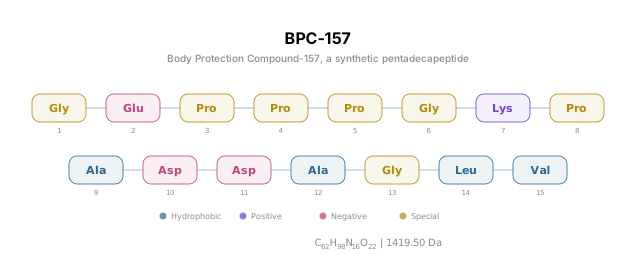
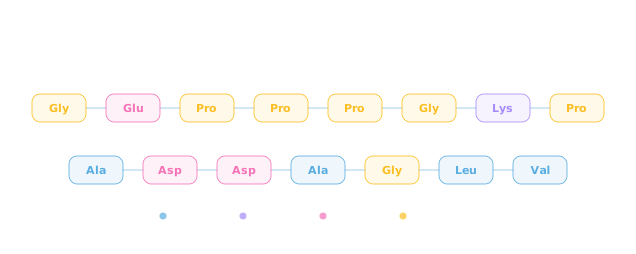
BPC-157 is a synthetic 15-residue fragment, GEPPPGKPADDAGLV, of BPC, a roughly 40-residue protein identified in human gastric juice. It was characterized at the University of Zagreb from the early 1990s in the context of gastric cytoprotection.[1]

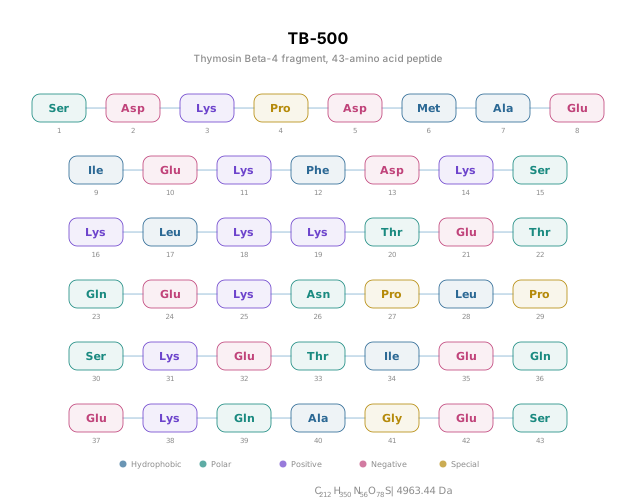
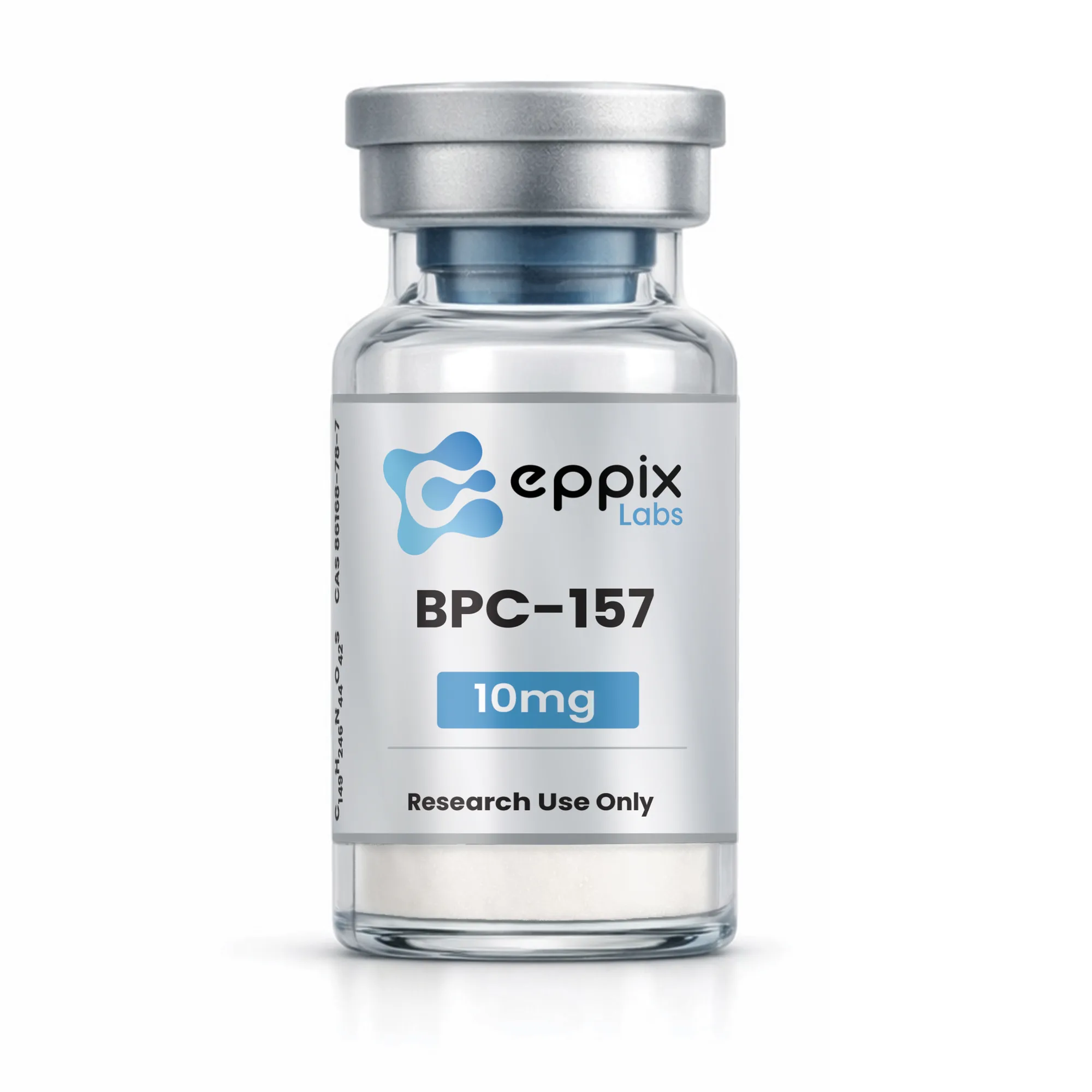
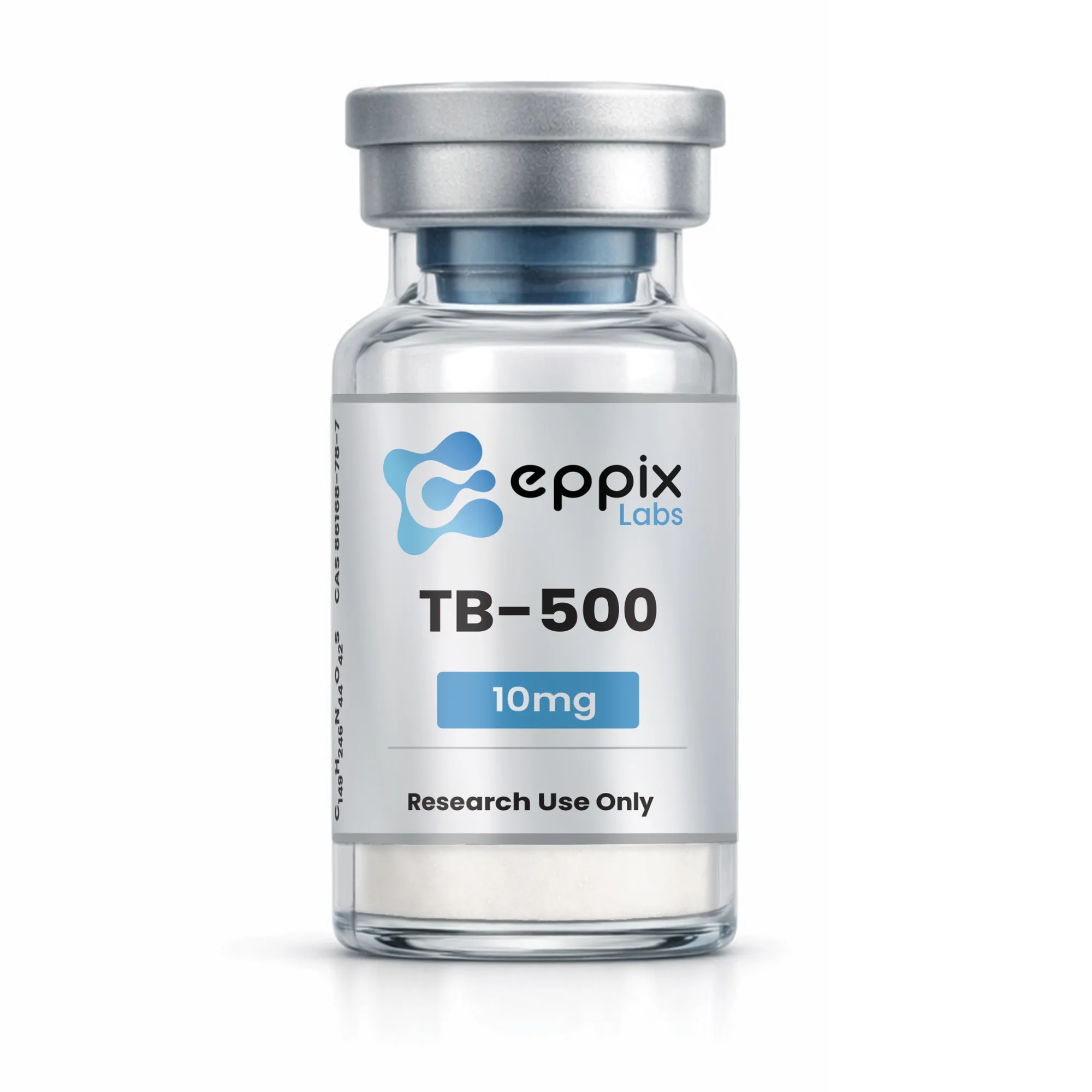
TB-500, as supplied by Eppix Labs, is synthetic full-length thymosin β4: a 43-residue, 4.9 kDa actin-sequestering protein present in most mammalian cells.[3] The name is also used on the research market for the acetylated seven-residue fragment Ac-LKKTETQ from the protein's actin-binding region, under a fifth of its mass, so the name alone does not tell you which molecule a vial contains.

That naming problem is the single most important thing to settle before comparing them: the thymosin β4 literature describes the full protein, so it applies to a full-length vial and not to a fragment sold under the same name.
Amino Acid Sequence
Amino Acid Sequence diagram
BPC-157: 15 residues, GEPPPGKPADDAGLV.
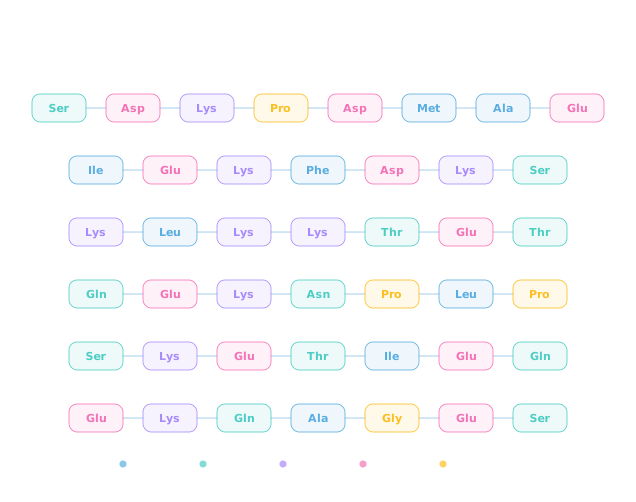
Amino Acid Sequence
Amino Acid Sequence diagram
TB-500: synthetic thymosin β4, 43 residues.

Proposed mechanisms

BPC-157. No single receptor has been established. The published mechanistic work centres on angiogenic signaling, on modulation of the nitric oxide system through the Src, Caveolin-1 and eNOS pathway,[5] and on effects in tendon fibroblast assays including outgrowth, survival and migration.[3 in the BPC-157 guide] The absence of an identified receptor is a real gap, not a detail.

Thymosin β4. The mechanism is unusually well defined for this category: it is the principal G-actin sequestering protein in mammalian cells, and the actin-binding function anchors everything downstream in wound, corneal and cardiac models.[3] Whether a seven-residue fragment sold under the same name reproduces that behaviour is a separate question the literature has largely not asked.

Evidence quality, compared honestly

Neither compound has human efficacy trials. Below that ceiling they differ:

  • ·BPC-157: volume, concentrated source. A large preclinical literature across gastrointestinal, tendon, wound and vascular models, much of it from one research group. Volume is a strength; concentration in one group is a limitation on how independently confirmed it is.
  • ·Thymosin β4: quality, independent groups. Fewer but methodologically stronger papers, in higher-impact venues including Nature, and from independent groups.[4] They describe the full-length protein, which is what a full-length TB-500 vial contains; they do not transfer to a fragment.
  • ·BPC-157 human work: an oral formulation (PL-14736) entered early clinical investigation for inflammatory bowel disease without a published pivotal dataset.
  • ·Thymosin β4 human work: reached clinical investigation in dermal and corneal indications, with no approved indication.
  • ·Neither has an established human dose, a human safety record of meaningful size, or authorization from the FDA.

Practical differences that affect a purchase

  • ·Molecular size. BPC-157 is around 1419.5 Da; TB-500, supplied here as full-length thymosin β4, is around 4,963 Da. BPC-157 is a straightforward synthesis and thymosin β4 a longer, harder one, which is why an MS identity result matters more on the TB-500 certificate: a short substitute is the cheap failure a purity figure alone cannot see.
  • ·Naming risk. TB-500 carries a real risk of buying the wrong molecule, because "TB-500" and "thymosin β4" are used interchangeably in marketing and are not the same compound. A measured mass on the certificate settles it. BPC-157 has a smaller version of this problem in acetate against arginate salt forms, which are the same peptide.
  • ·Regulatory position. Both were among the six peptides an FDA advisory committee voted in July 2026 to recommend for the Section 503A compounding bulks list, in each case against FDA staff's recommendation and by an 8-6 margin with one abstention. The votes are non-binding, no final determination has been issued, and neither appears in 21 CFR 216.23. Neither is authorized in the US.
  • ·Anti-doping. TB-500 and thymosin β4 appear on the World Anti-Doping Agency Prohibited List under growth factors affecting muscle, tendon or ligament. Researchers working with athletes ask about this often enough to state it.

Verifying either one

The same three checks apply to both: MS identity against the expected mass, HPLC purity, and measured content against the labeled amount. For TB-500 the identity line does extra work, because a mass near 4,963 Da is the only thing that distinguishes full-length thymosin β4 from a fragment or anything else a supplier might have put in the vial.

Certificates for both compounds are published before sale and verifiable on the testing laboratory's own database.

Published Certificate
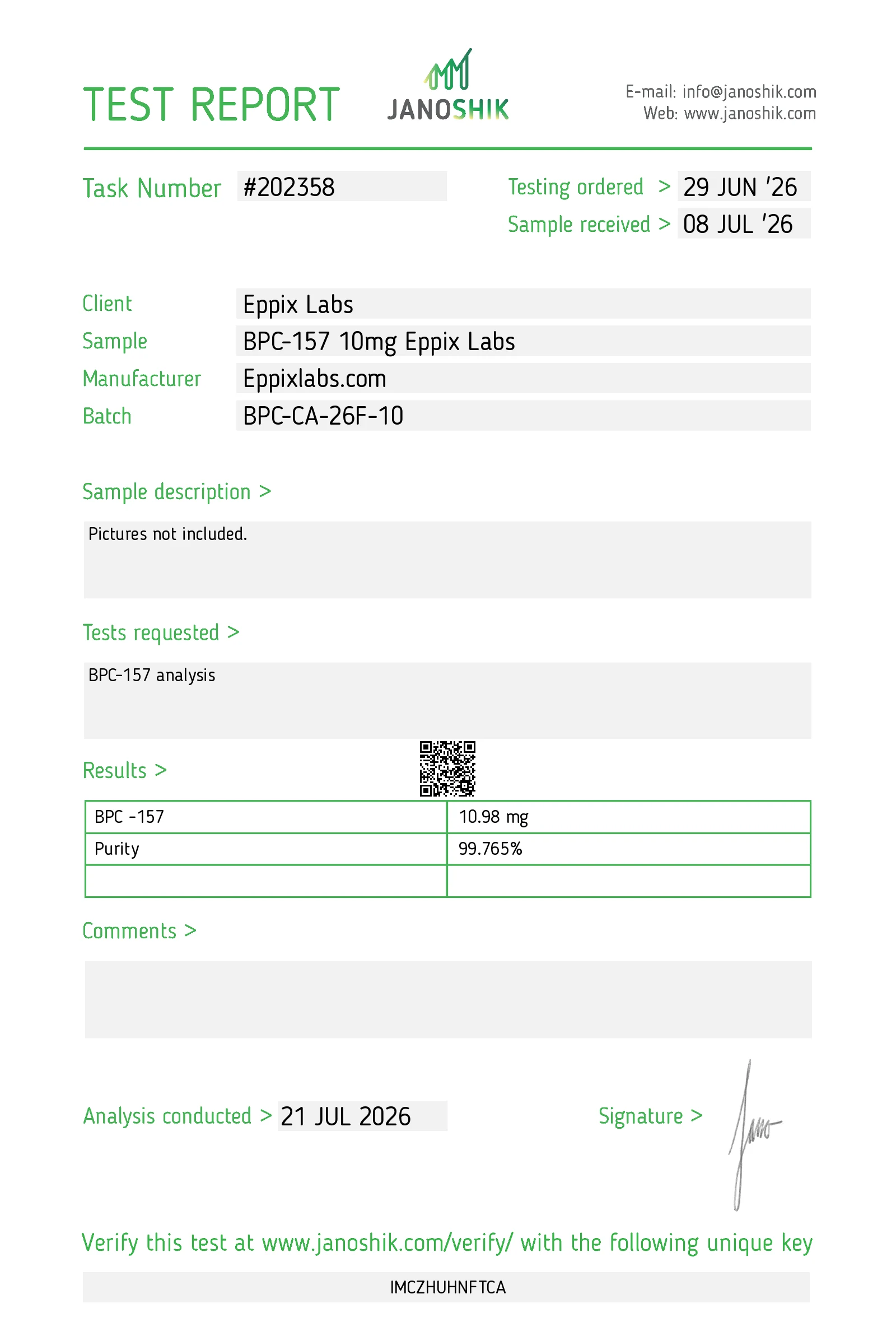
Certificate of analysis for BPC-157 10mg, batch BPC-CA-26F-10, 99.765% purity, 10.98 mg measured content

Select strength

Batch
BPC-CA-26F-10
Purity (HPLC)
99.765%
Measured content
10.98 mglabeled 10 mg
Laboratory
Janoshik
Current published BPC-157 certificate, by strength.
Published Certificate
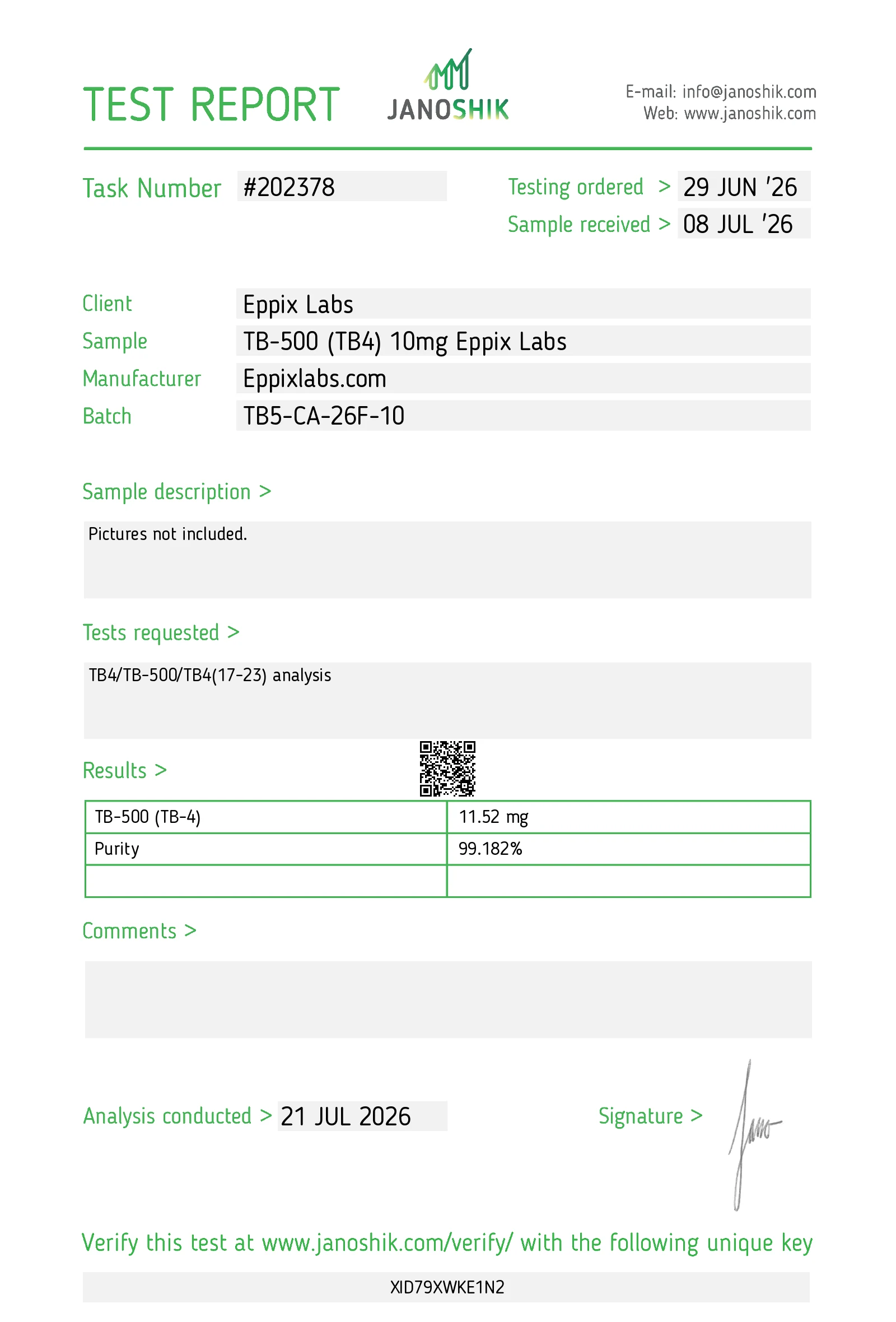
Certificate of analysis for TB-500 10mg, batch TB5-CA-26F-10, 99.182% purity, 11.52 mg measured content
Batch
TB5-CA-26F-10
Purity (HPLC)
99.182%
Measured content
11.52 mglabeled 10 mg
Laboratory
Janoshik
Current published TB-500 certificate.

Which to work with

If the research question is about the compound in the vial, BPC-157 has the better-matched literature: the published work is on the same 15-residue molecule you are buying. If the research question is about actin sequestration and thymosin β4 biology, full-length TB-500 matches the literature too; a seven-residue fragment would only be a proxy for it, and that gap should be stated in the methods rather than assumed away.

Both are stocked, both have published certificates, and both are supplied strictly as research materials.

Frequently Asked

Are BPC-157 and TB-500 the same class of compound?

No. BPC-157 is a fragment of a gastric-juice protein with no identified receptor. TB-500 here is synthetic full-length thymosin β4, an actin-sequestering protein. Different origins, different proposed mechanisms.

Which has better evidence?

BPC-157 has more preclinical volume, concentrated in one research group. Thymosin β4 has fewer but methodologically stronger and more independent papers, and they describe the full-length protein a full-length TB-500 vial contains. Neither has human efficacy trials.

Is TB-500 the same as thymosin beta-4?

It depends on the vial. The Eppix Labs TB-500 is synthetic full-length thymosin β4, a 43-residue protein of about 4.9 kDa. Some suppliers sell the acetylated seven-residue fragment Ac-LKKTETQ under the same name, under a fifth of the mass; the MS identity result on the certificate tells you which.

Did the FDA approve either in 2026?

No. An FDA advisory committee voted 8-6 in July 2026 to recommend both for the Section 503A compounding bulks list, against FDA staff's recommendation. The votes are non-binding, no final determination has been issued, and neither is authorized in the US.

Can both be verified the same way?

Yes: MS identity against expected mass, HPLC purity, measured content against label, with the certificate verifiable on the testing laboratory's own site. The identity line carries more weight for TB-500 because of the naming problem.

References

  1. Sikirić, P. et al. (1993). A new gastric juice peptide, BPC. An overview of the stomach-stress-organoprotection hypothesis and beneficial effects of BPC. J Physiol Paris 87(5):313-327. PMID 8298609
  2. Hsieh, M.J. et al. (2020). Modulatory effects of BPC 157 on vasomotor tone and the activation of Src-Caveolin-1-endothelial nitric oxide synthase pathway. Sci Rep 10(1):17078. PMID 33051481
  3. Goldstein, A.L., Hannappel, E., Kleinman, H.K. (2005). Thymosin β4: actin-sequestering protein moonlights to repair injured tissues. Trends Mol Med 11(9):421-429. PMID 16099219
  4. Bock-Marquette, I. et al. (2004). Thymosin beta4 activates integrin-linked kinase and promotes cardiac cell migration, survival and cardiac repair. Nature 432(7016):466-472. PMID 15565145
  5. US Food and Drug Administration (2026). Pharmacy Compounding Advisory Committee meeting, 23-24 July 2026: bulk drug substances nominated for inclusion on the Section 503A Bulks List. FDA Advisory Committee Calendar. Source
  6. US Food and Drug Administration (2026). FDA briefing document, Pharmacy Compounding Advisory Committee: BPC-157, KPV, TB-500, MOTS-c, Emideltide, Semax and Epitalon. Agency review recommended against inclusion for each substance. FDA. Source
  7. Office of the Federal Register (2026). 21 CFR 216.23: bulk drug substances that can be used to compound drug products under section 503A. None of the six peptides appear on the list as of publication. eCFR. Source

Research Use Only

This article summarizes published preclinical research literature. Compounds referenced are supplied by Eppix Labs strictly as research materials for laboratory investigation within the United States. They are not approved by the FDA for human or veterinary use, and nothing on this page should be interpreted as medical advice or guidance on human or animal administration.