

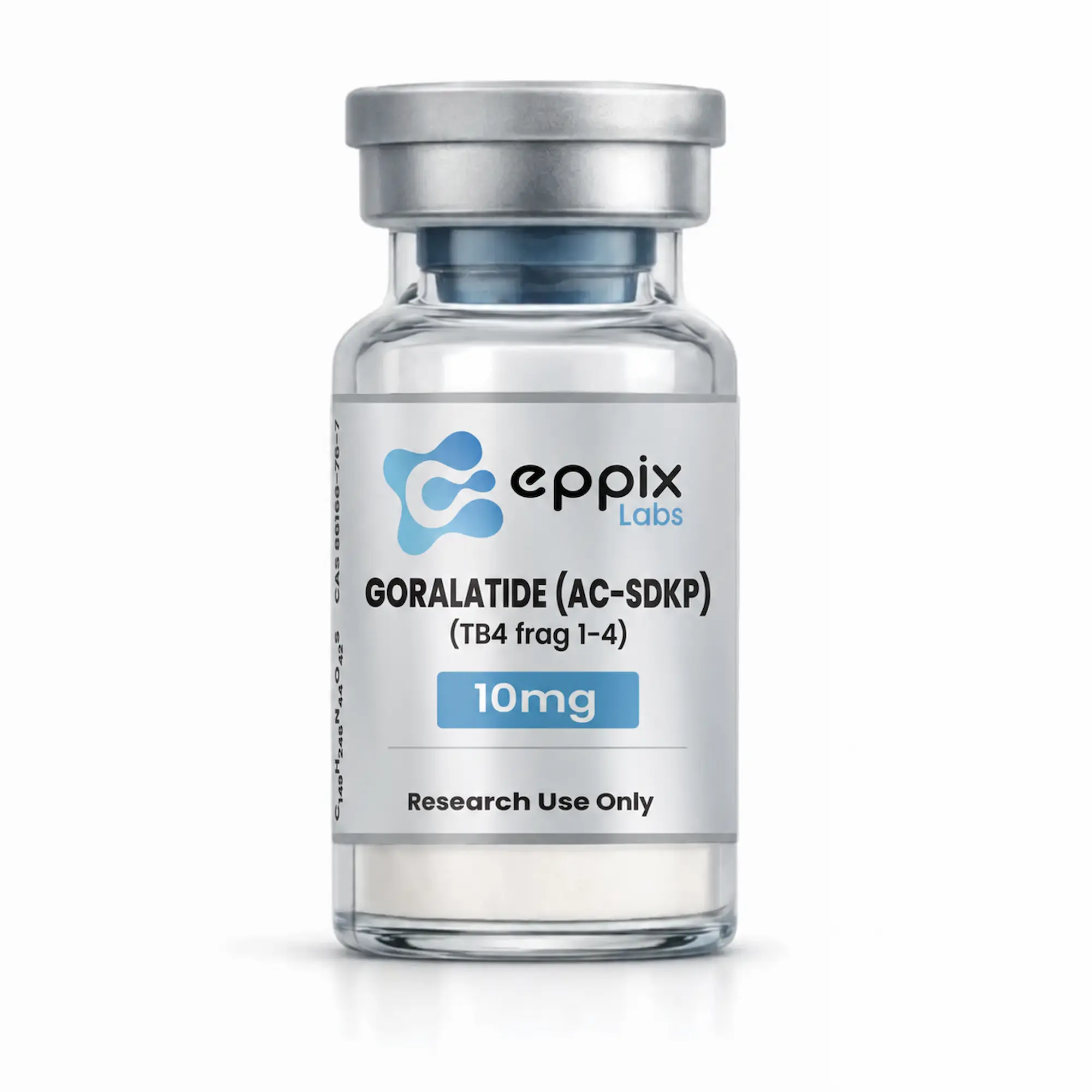
GORALATIDE (AC-SDKP)
- Batch
- ACSD-CA-26H-10
- Tested on
- 2026-09-03
- Added
- 2026-09-03
GORALATIDE (AC-SDKP) — TB-500/TB4
Goralatide (Ac-SDKP) USA — Lyophilized Vials
Goralatide is a synthetic tetrapeptide — N-acetyl-Ser-Asp-Lys-Pro — produced for controlled laboratory research into fibrotic and haematopoietic signaling. It corresponds to the N-terminal four residues of thymosin β4 (Tβ4), the 43-amino-acid actin-sequestering protein sold in research markets under the name TB-500. In scientific literature, Ac-SDKP is studied as an endogenous regulatory peptide released from thymosin β4 by prolyl oligopeptidase and meprin-α, and cleared from circulation by the N-domain of angiotensin-converting enzyme. Research frameworks examine its role in collagen synthesis, fibroblast proliferation, inflammatory cell recruitment, and haematopoietic progenitor cell cycling within controlled in vitro and preclinical models.
Related
You May Also Like
Recovery Compound BPC-157 is a synthetic peptide derived from a fragment of a naturally occurring gastric protein. It is produced for laboratory research and studied within controlled experimental environments.
From$49.99
Thymosin Beta-4 Fragment Research Peptide TB-500 is a synthetic research peptide modeled after thymosin beta-4, a naturally occurring peptide involved in cellular signaling processes. It is developed for controlled laboratory investigation within regulated experimental environments.
From$59.99
Thymosin Beta-4 Actin-Binding Fragment TB-500 Fragment 17-23 is the seven-residue actin-binding region of thymosin beta-4, studied in research on tissue repair and cell migration.
From$44.99
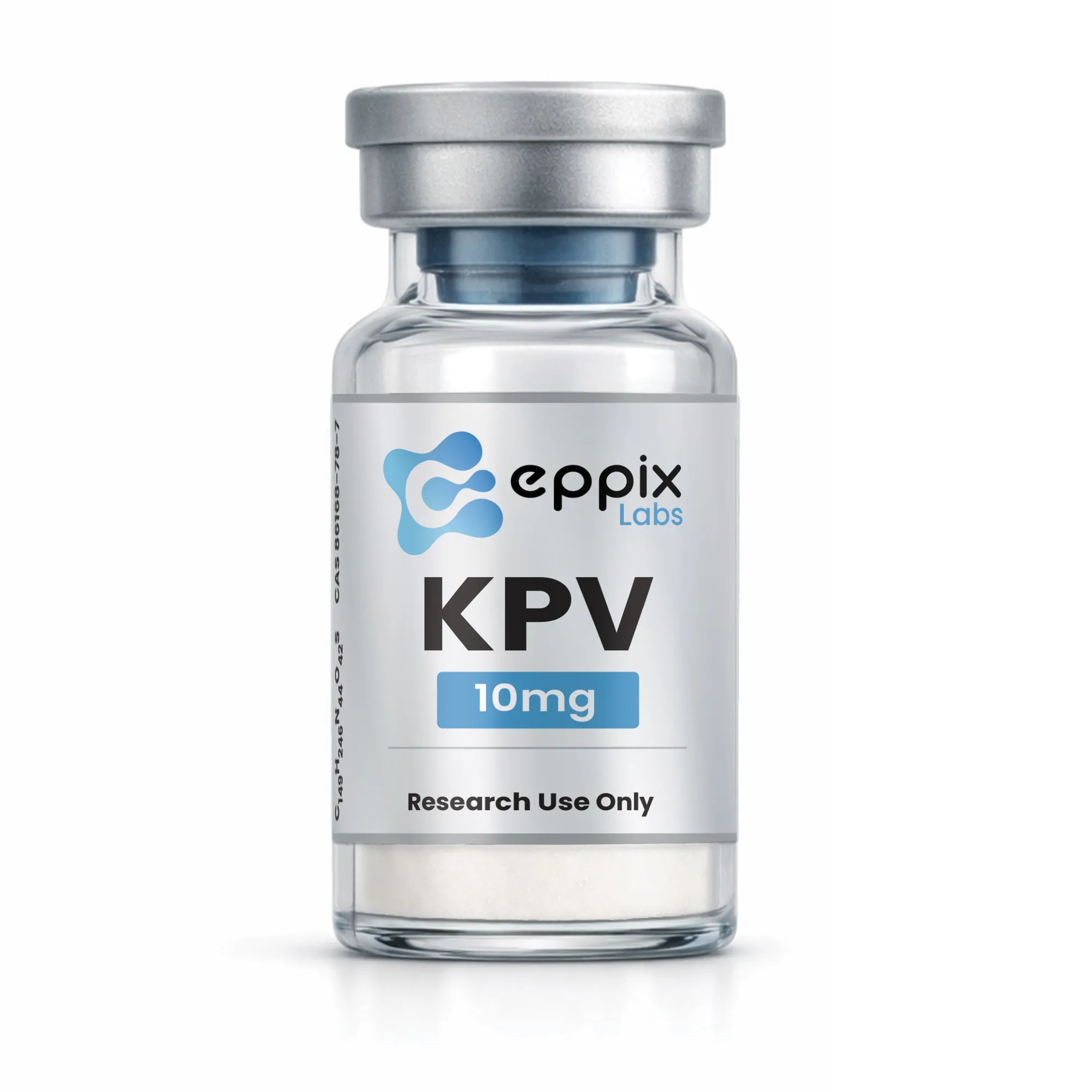
Tripeptide Research Compound KPV is a synthetic tripeptide composed of lysine–proline–valine and represents a fragment derived from the alpha-melanocyte–stimulating hormone (α-MSH) sequence. It is developed for controlled laboratory research involving peptide-mediated signaling systems.
From$49.99