

Blends
Multi-Peptide Research Blends — United States
A co-lyophilized blend is several compounds freeze-dried together in one vial. GLOW combines GHK-Cu, BPC-157 and TB-500; KLOW adds KPV. The remaining blends here pair repair-model compounds in other ratios.
Blends break the usual verification shortcut, and it is worth being precise about why. A purity result on a multi-compound vial describes the material as a whole. It cannot tell you the ratio between the components, which means a blend can return an excellent purity figure while being weighted quite differently from what the label describes. Nothing about the purity number is wrong; it simply does not answer the question a blend raises.
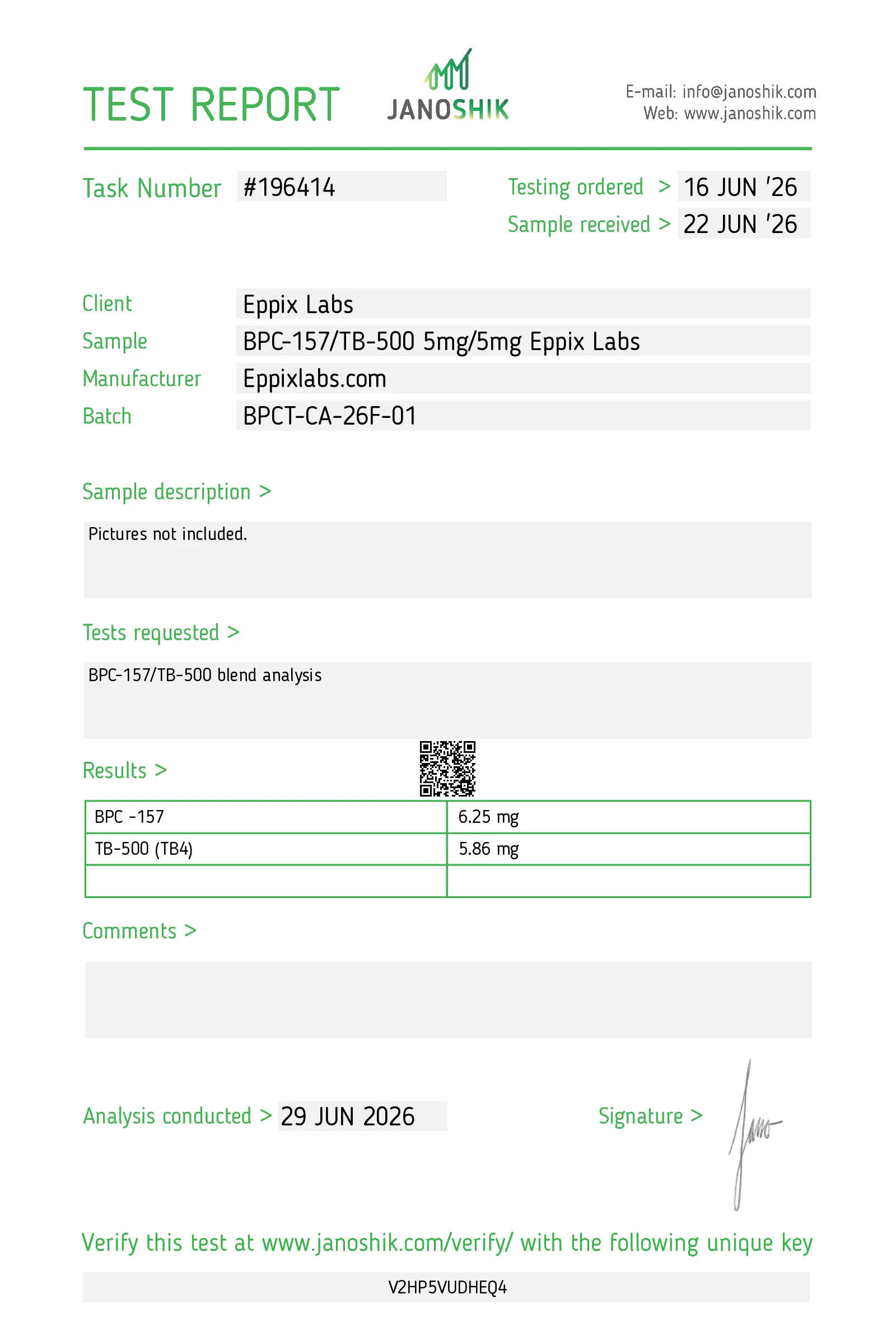
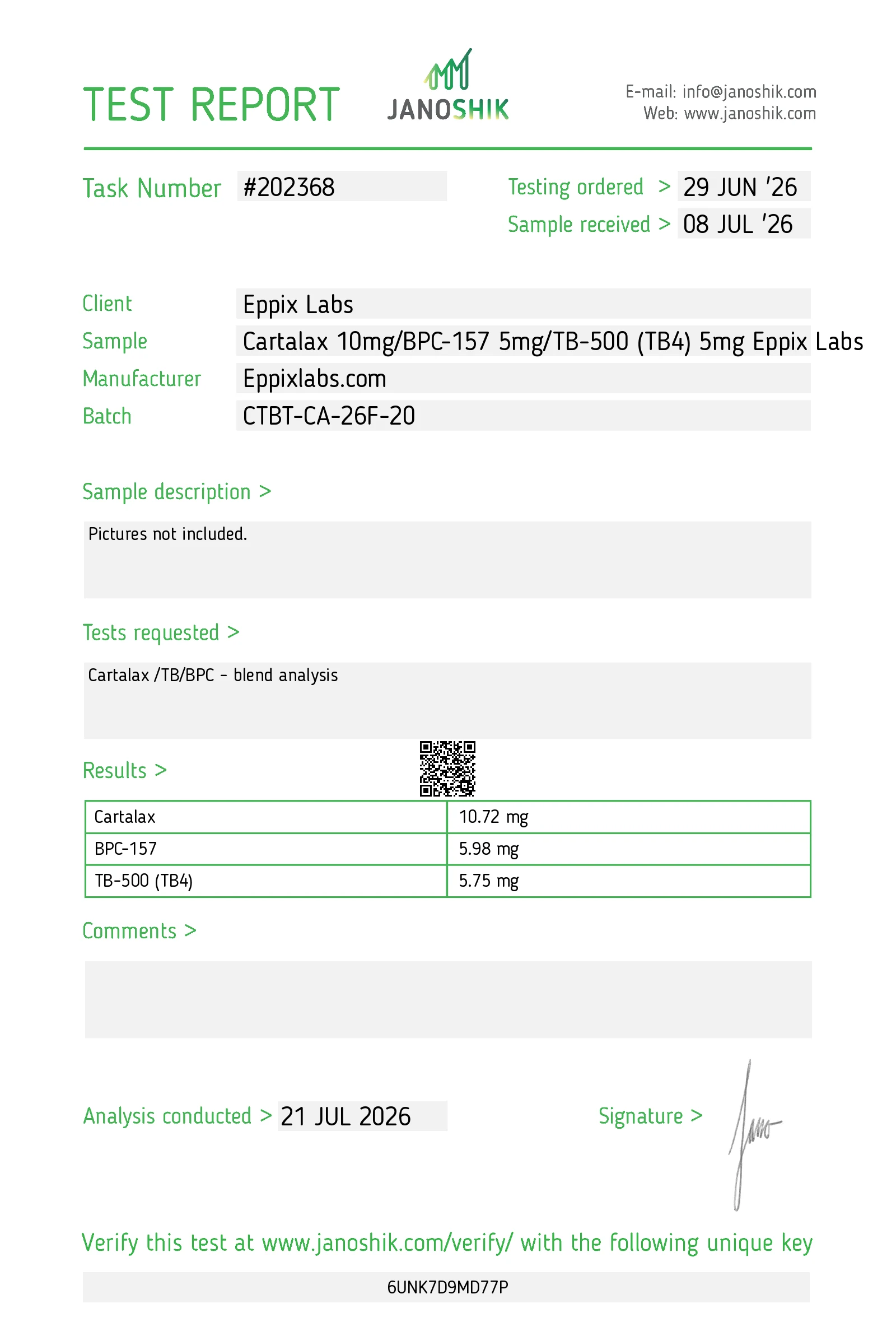
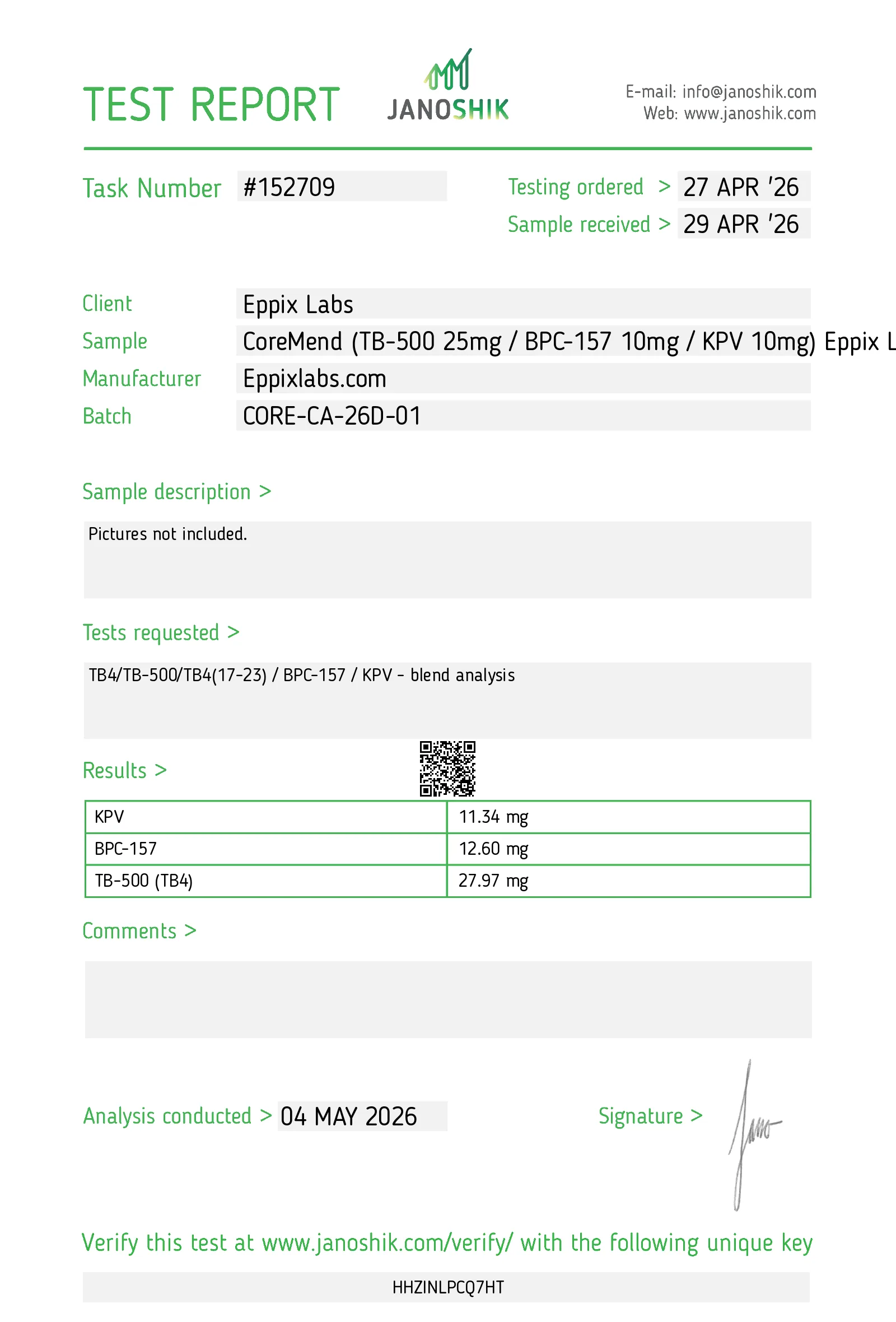
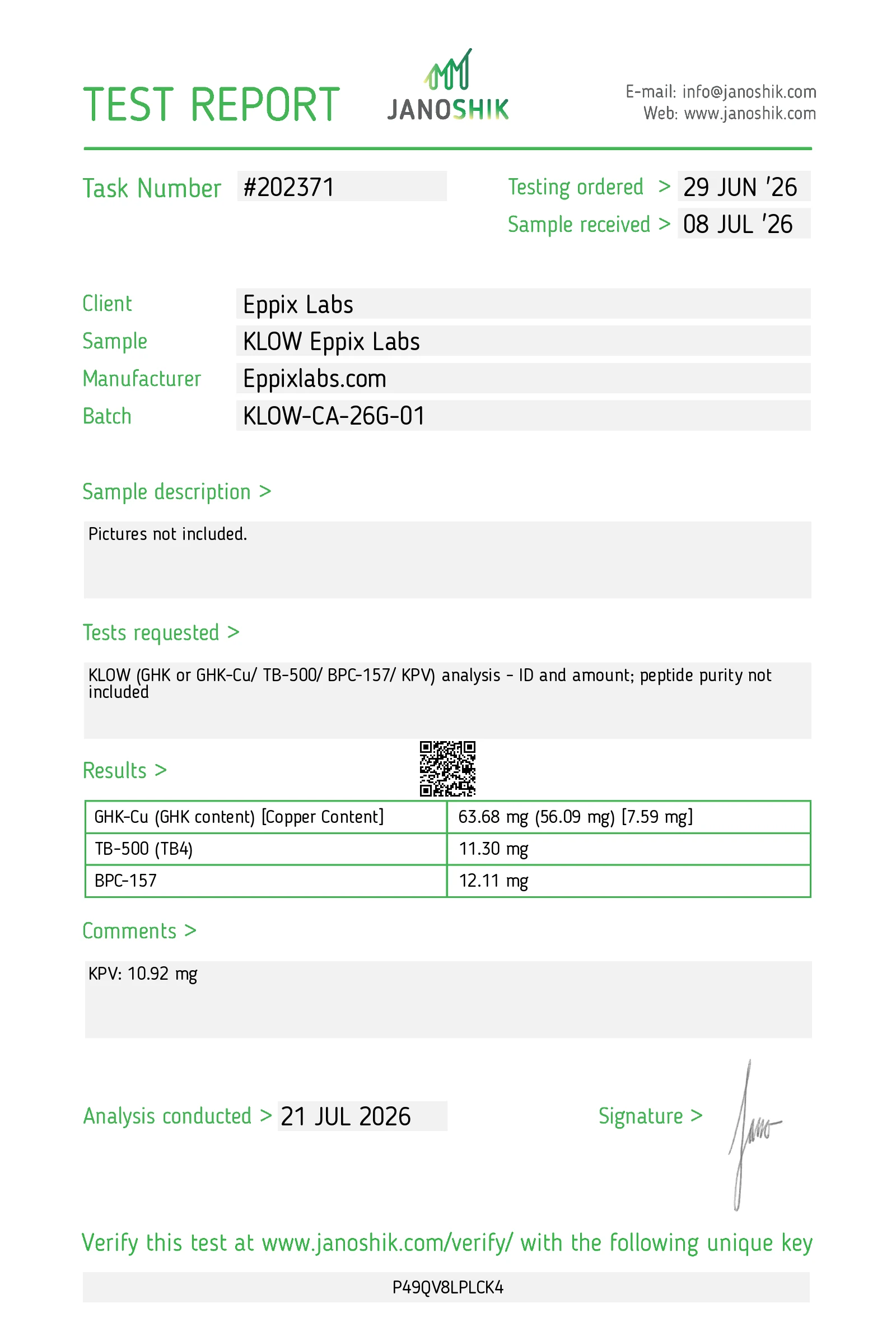
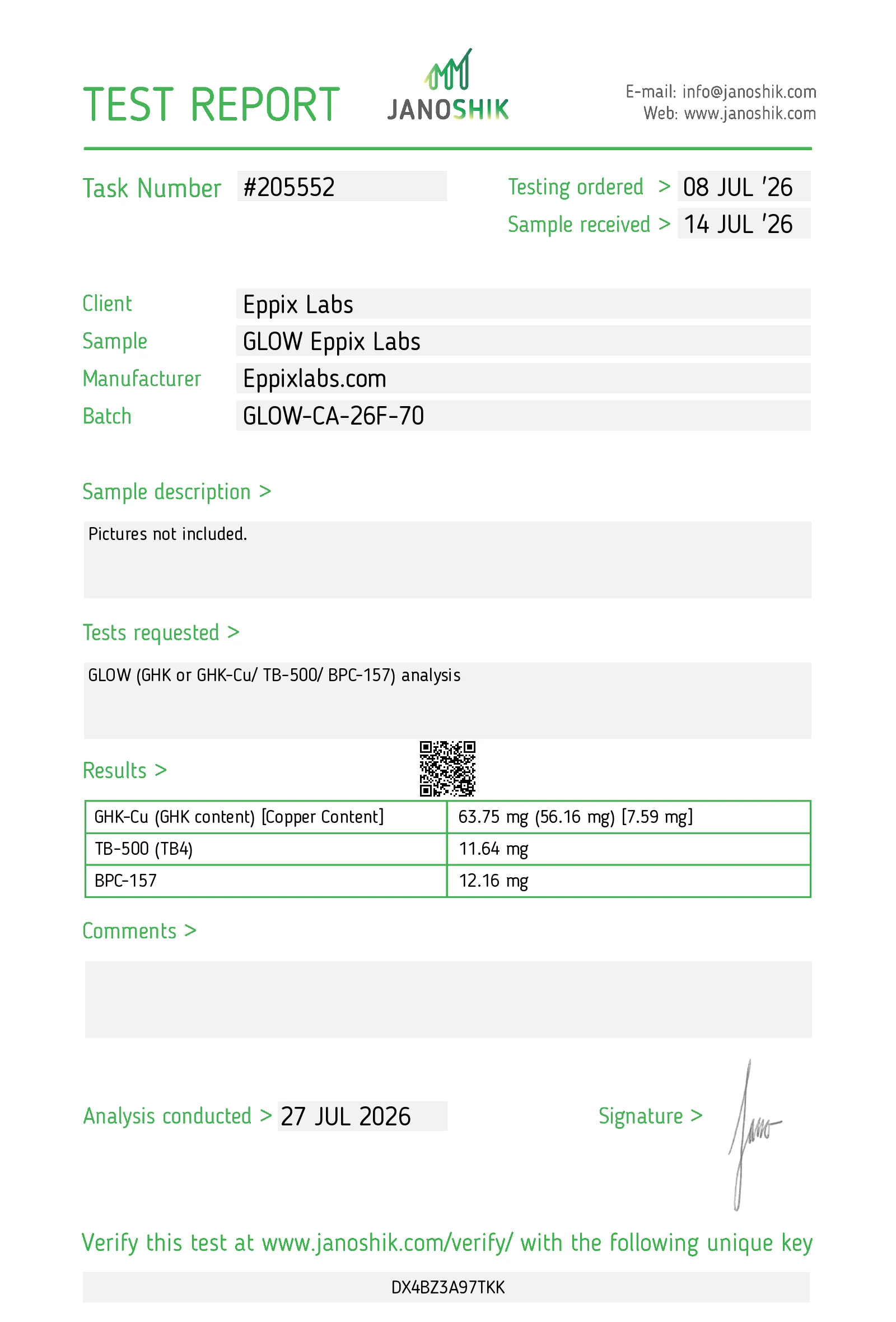
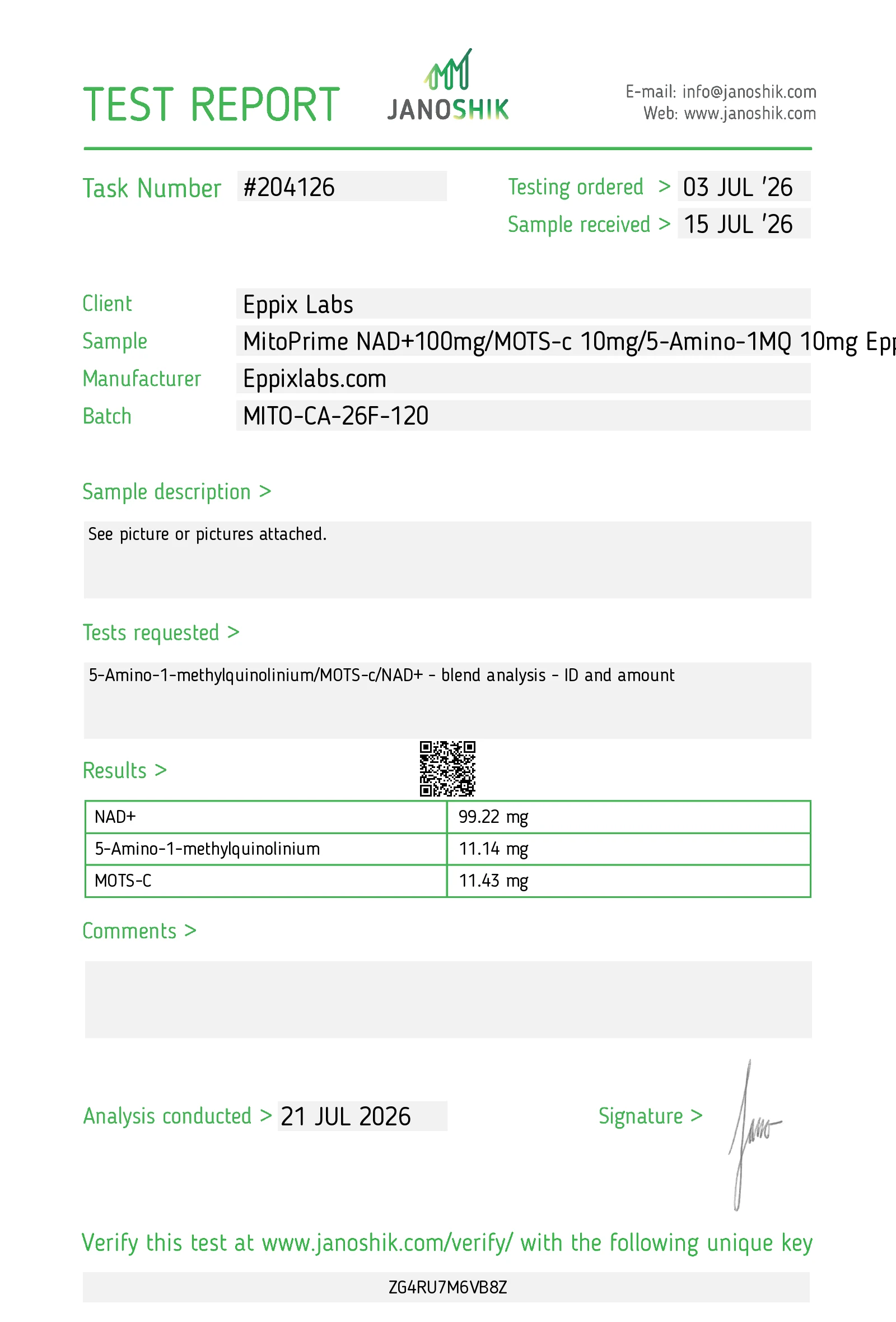
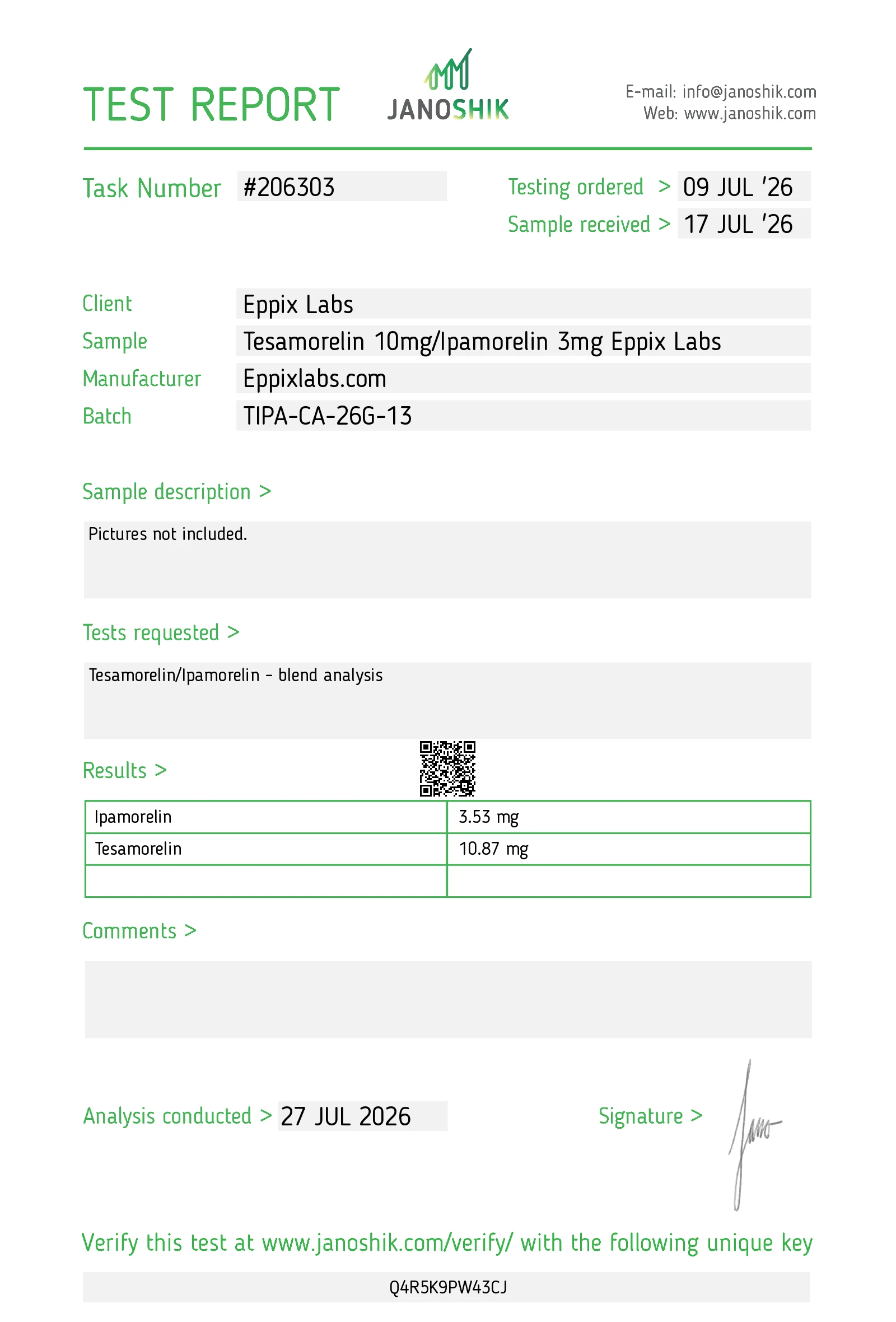
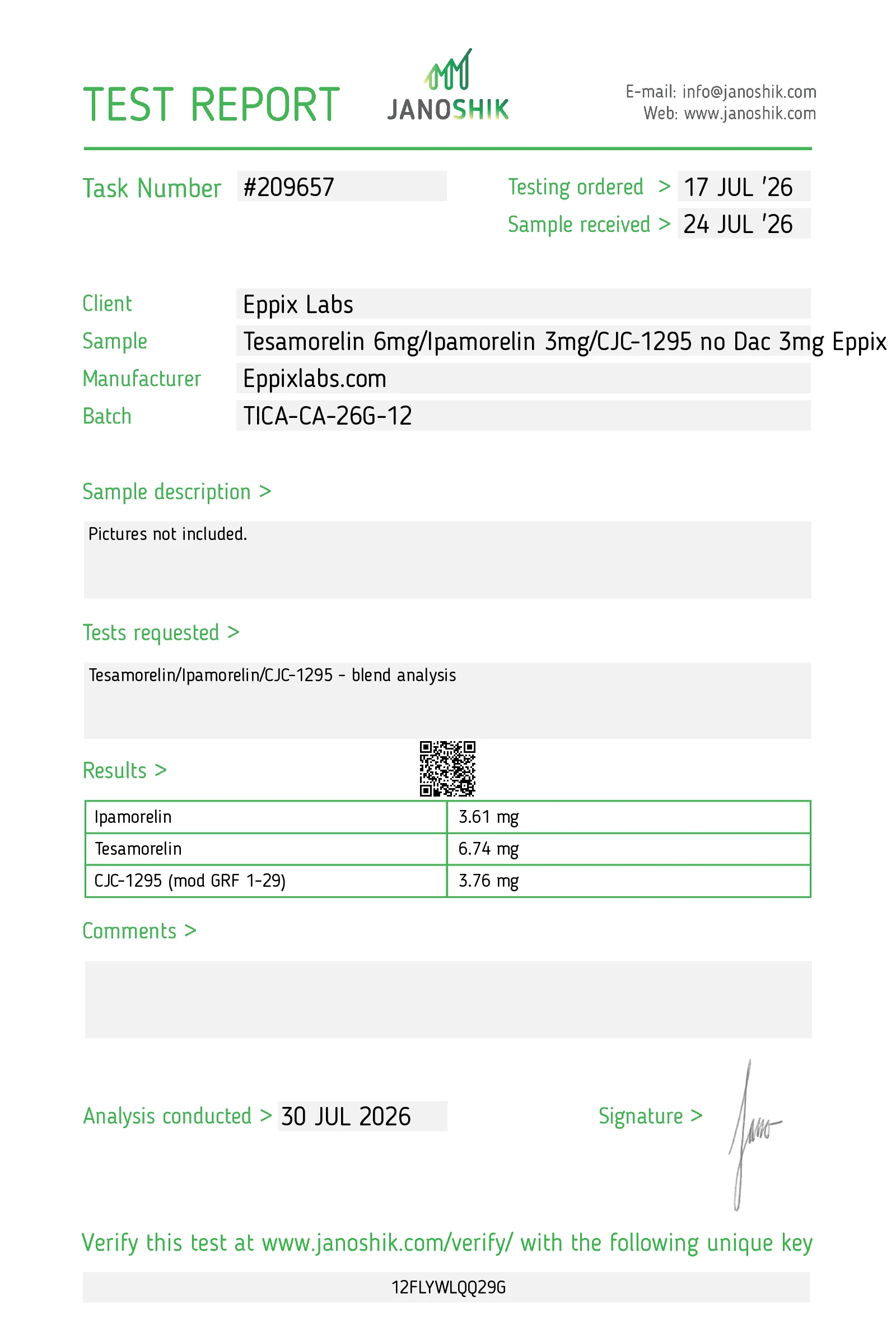
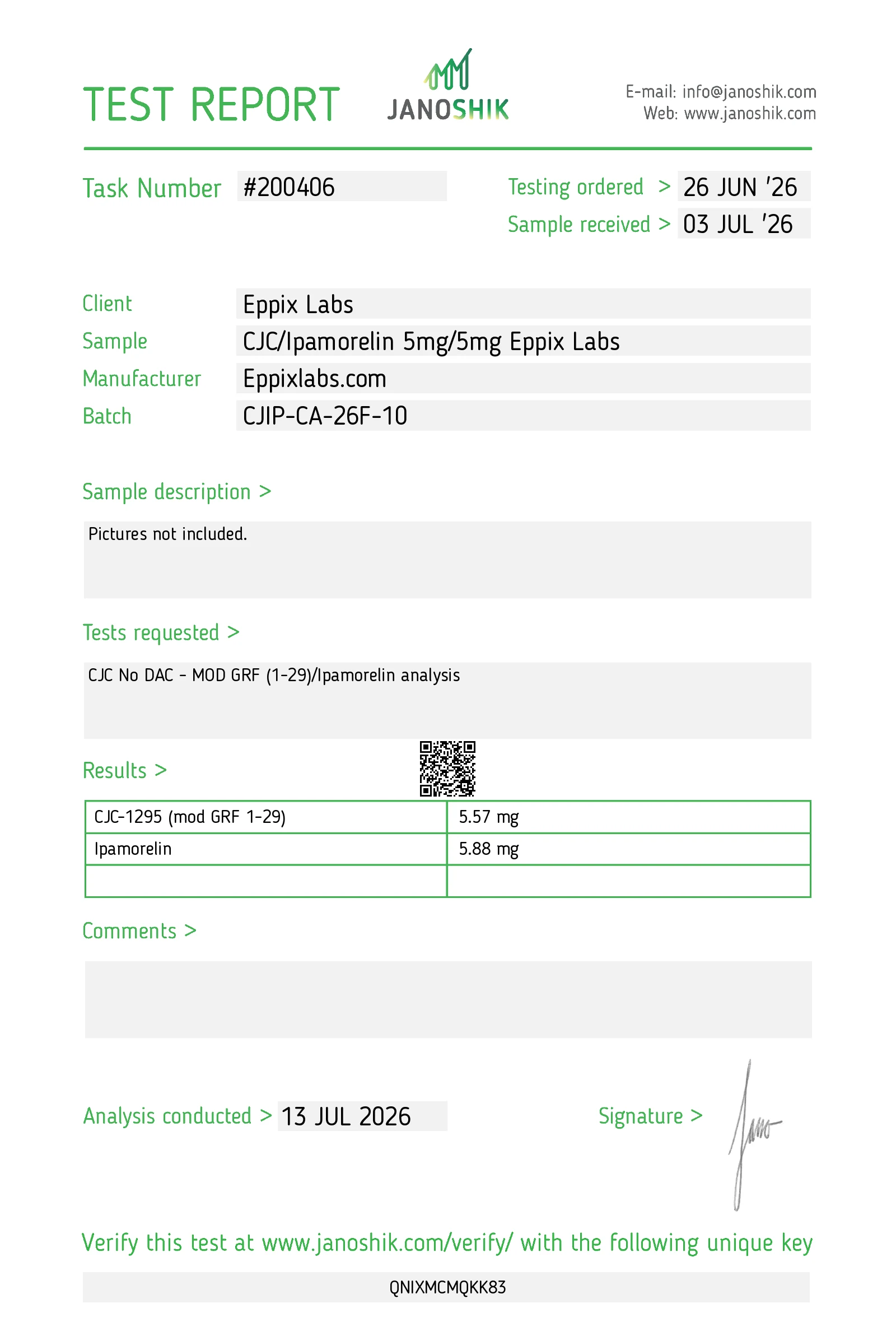
The figure that does is per-component mass — each compound in the vial measured separately against what the label claims for it. That is what is published for every blend batch here: not one blended purity figure, but the measured content of each component, tied to the lot code on the vial. Reconstitution does not separate a blend, so the ratio is fixed at manufacture and cannot be corrected afterwards.
Each component's own product page carries the underlying literature and is linked from every blend. Supplied strictly as laboratory research materials, shipped domestically within the United States.
In this category: GLOW · KLOW · BPC-157 / TB-500 · Coremend · Wolverine
9 products
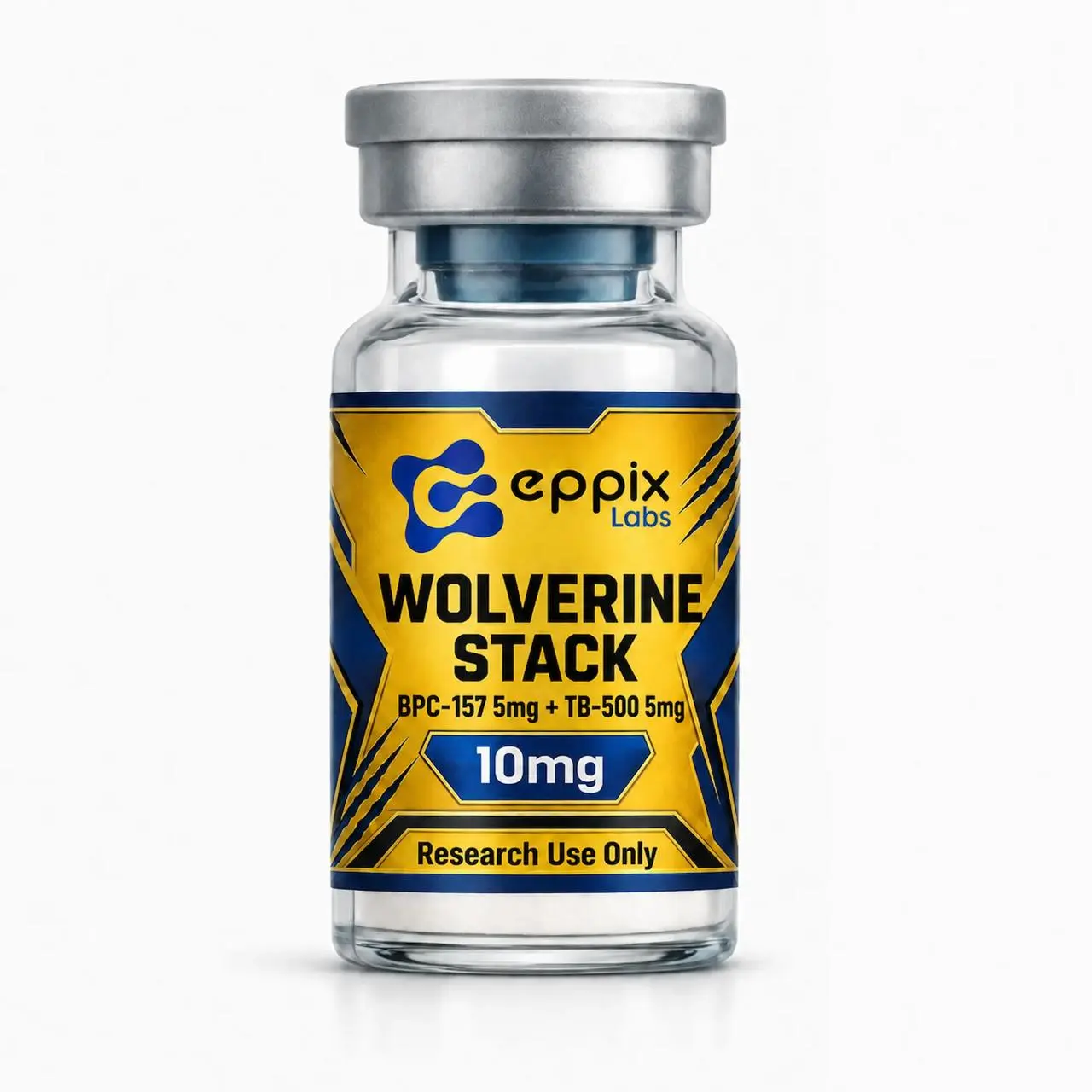
 10mg
10mgRecovery Compound BPC-157 – TB-500 Blend, also known as the Wolverine Blend, is a dual-peptide research formulation combining BPC-157 and TB-500 in equal concentrations.
From$59.99
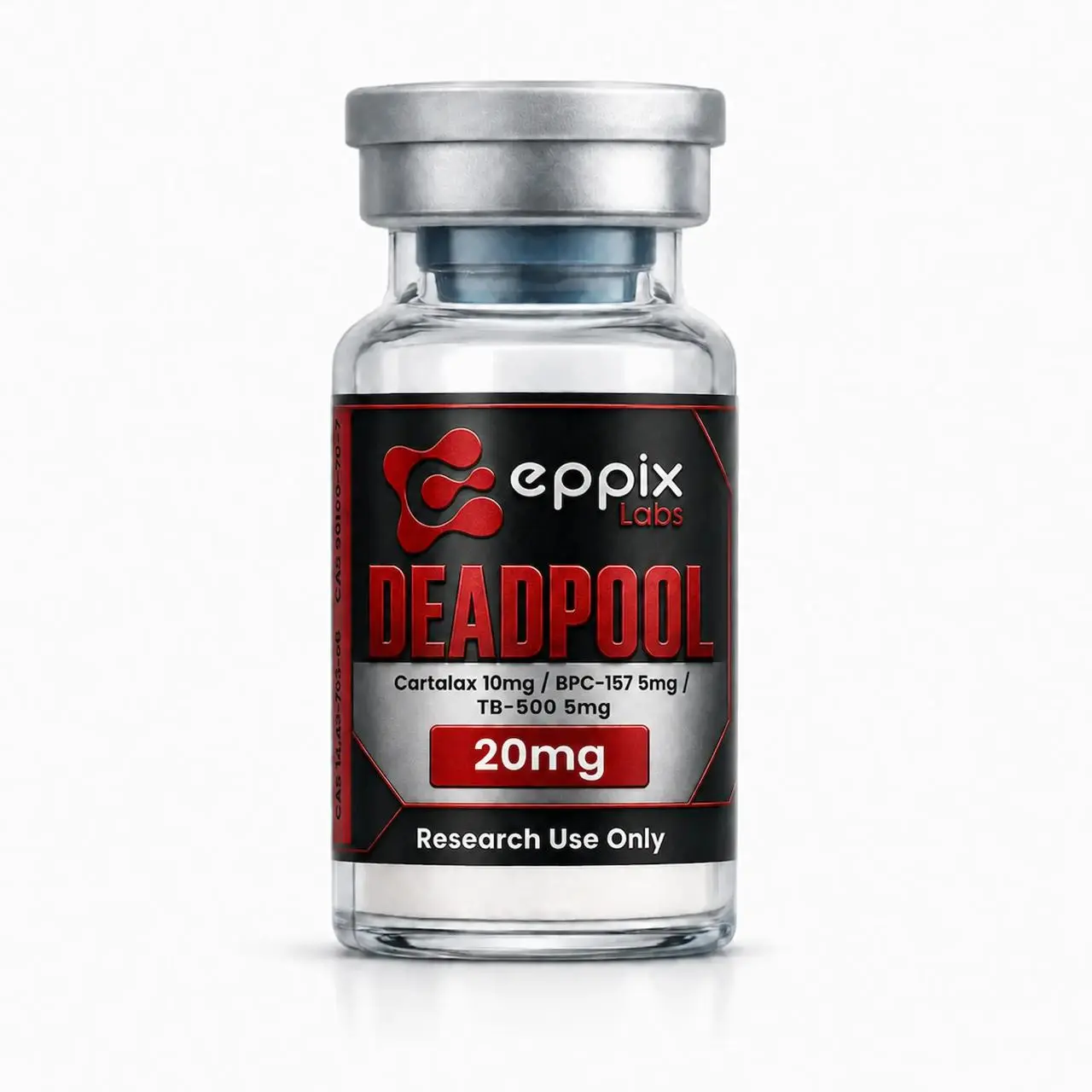
 20mg
20mgRecovery Blend Wolverine+ is a research blend supplying cartalax, BPC-157, and TB-500 in a single vial.
From$99.99
 45mg
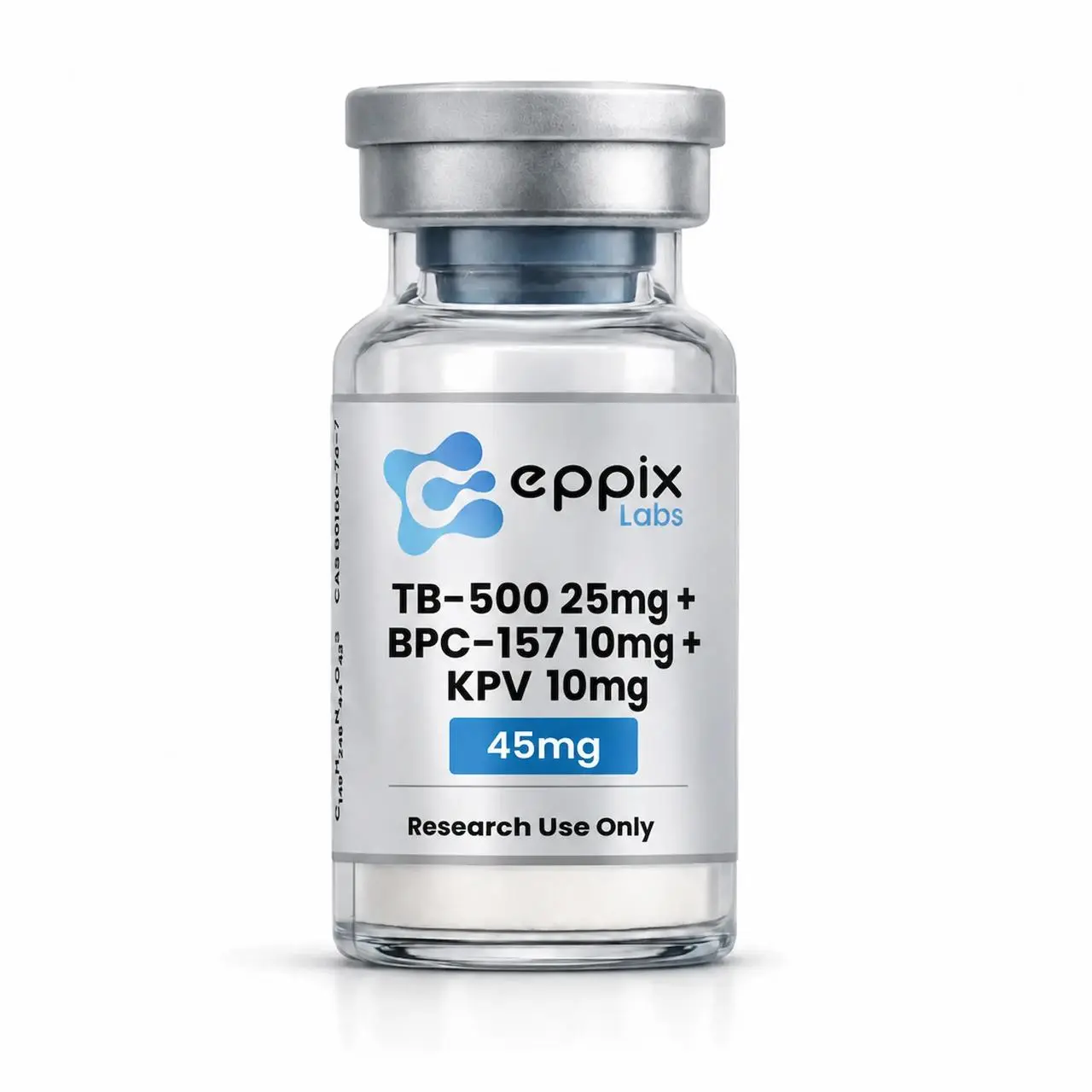
45mgTB-500 / BPC-157 / KPV Recovery Blend Coremend is a research blend combining TB-500 (thymosin beta-4 fragment), BPC-157, and the tripeptide KPV in a single preparation, studied for converging tissue-repair and inflammatory-signaling pathways.
From$220.00
 80mg
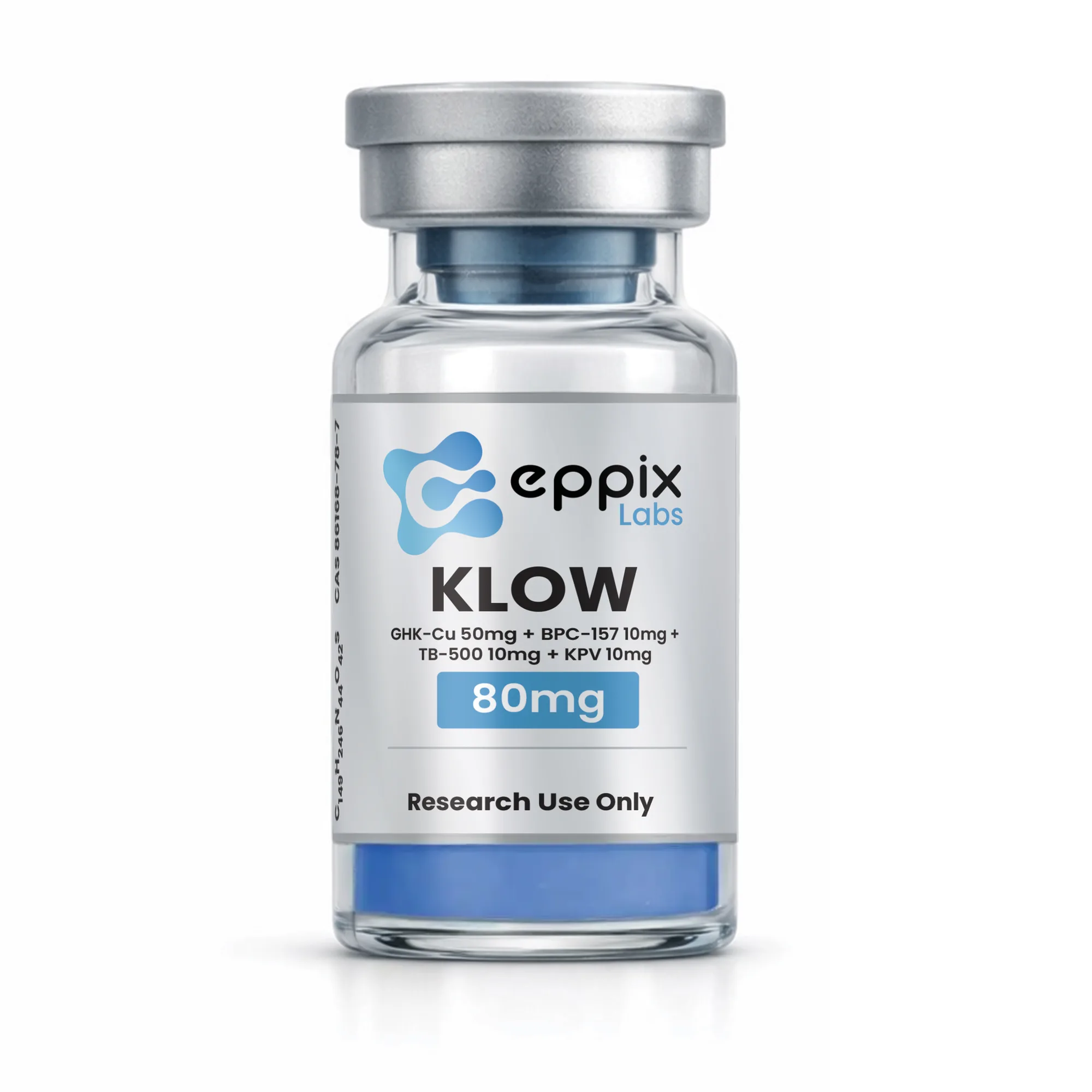
80mgMulti-Peptide Research Blend KLOW is a multi-peptide research blend integrating GHK-Cu, BPC-157, TB-500, and KPV into a unified formulation developed for controlled laboratory investigation.
From$124.99
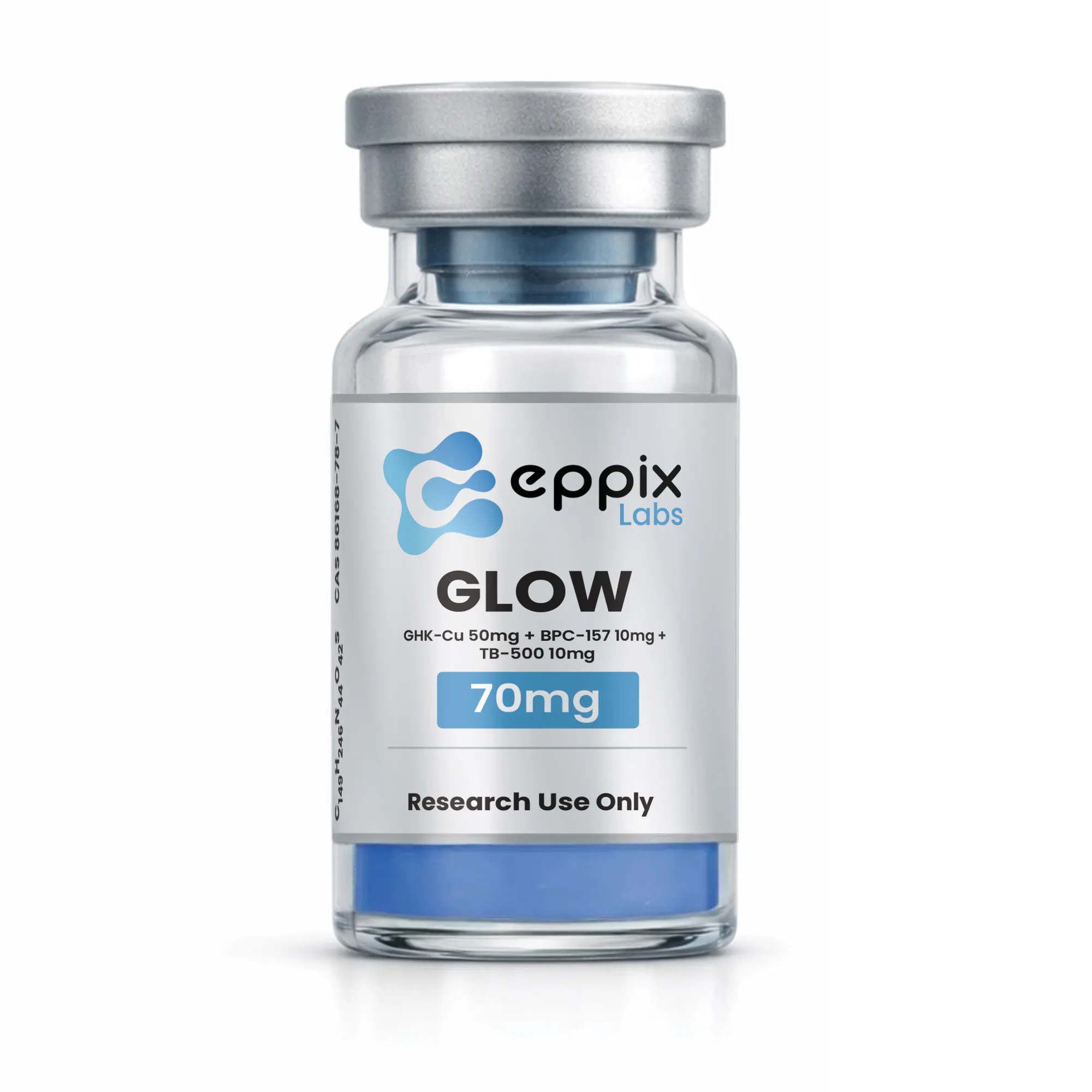
 70mg
70mgMulti-Peptide Research Blend GLOW is a multi-peptide research blend formulated for controlled laboratory investigation. It integrates GHK-Cu, BPC-157, and TB-500 into a single experimental compound.
From$99.99
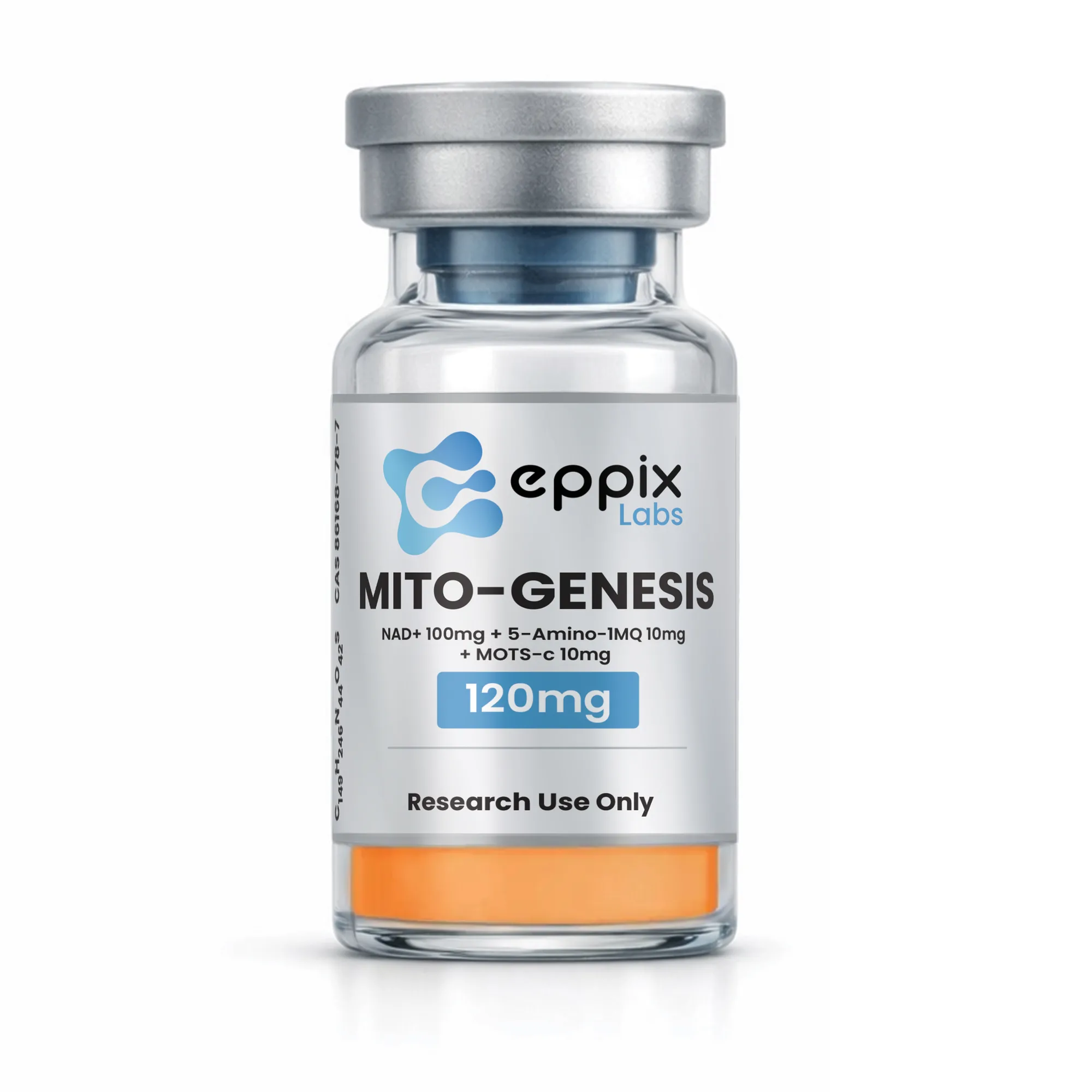
 120mg
120mgMitochondrial Blend Mito-Genesis is a research blend supplying NAD+, 5-Amino-1MQ, and MOTS-c in a single vial.
From$99.99
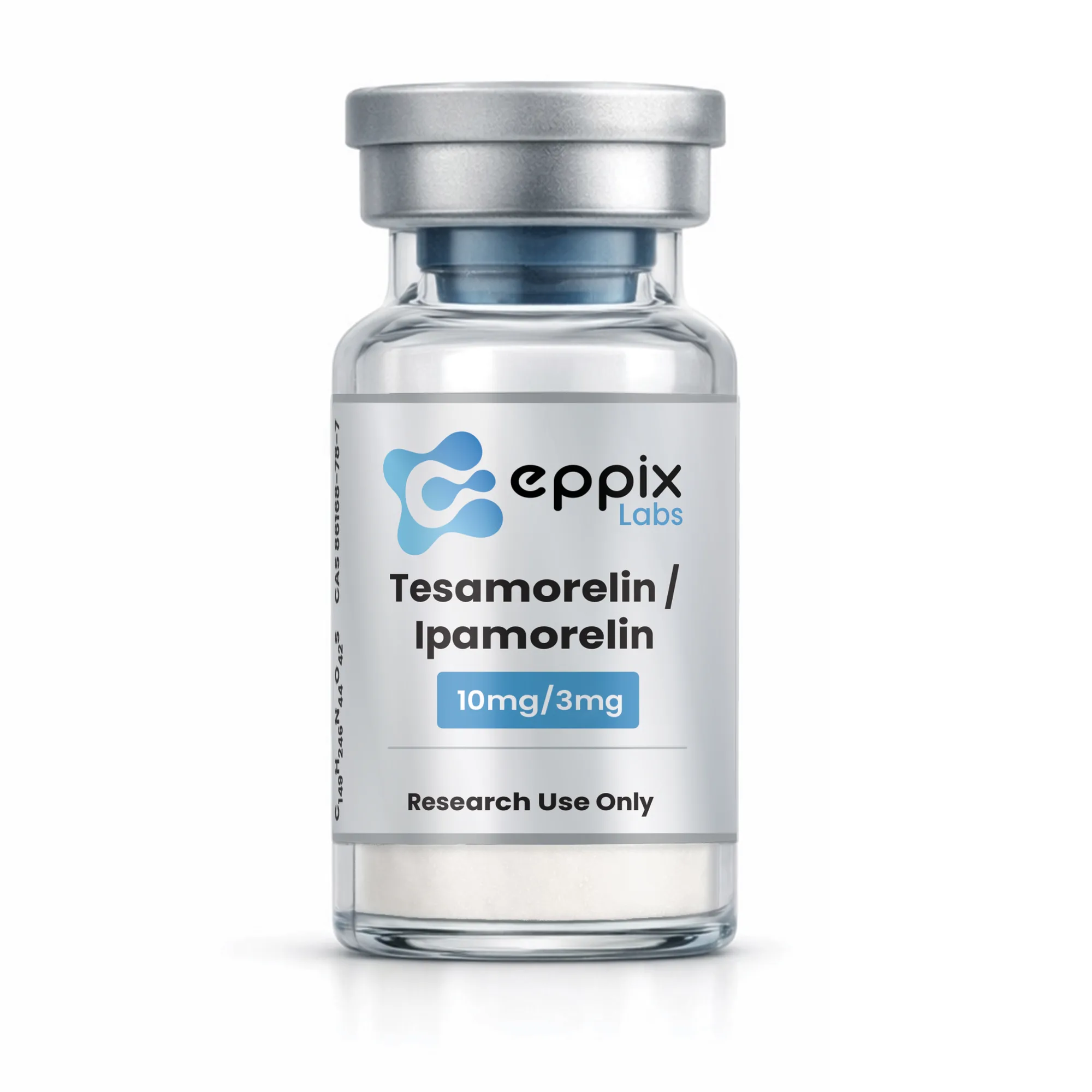
 13mg
13mgTesamorelin / Ipamorelin GH-Axis Blend The Tesamorelin + Ipamorelin blend combines a GHRH analogue (Tesamorelin) with a selective ghrelin-receptor agonist (Ipamorelin), studied for complementary stimulation of the GH/IGF-1 axis.
From$79.99
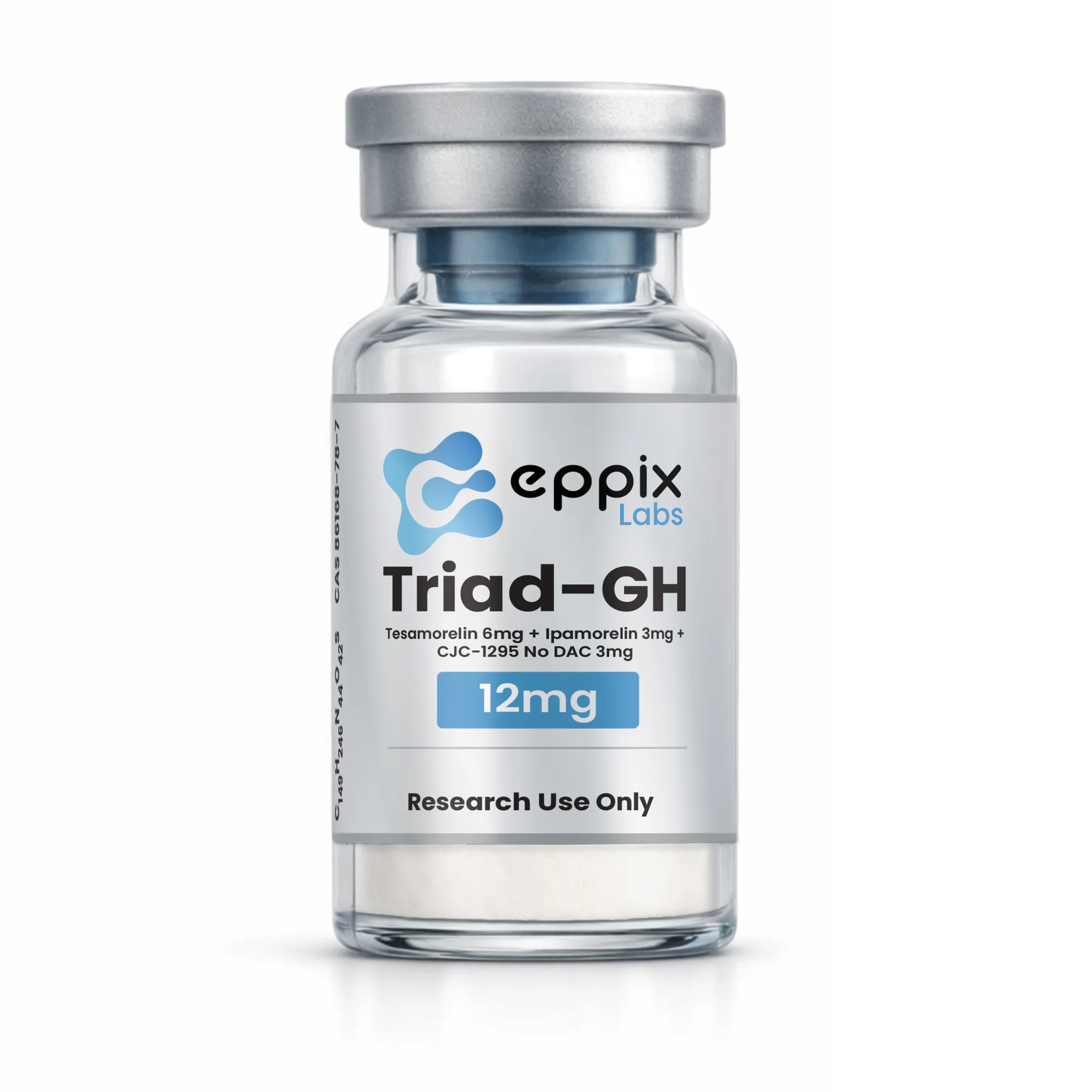
 12mg
12mgGrowth Hormone Secretagogue Blend Triad-GH is a research blend supplying tesamorelin, ipamorelin, and CJC-1295 (No DAC) in a single vial.
From$129.99
 10mg
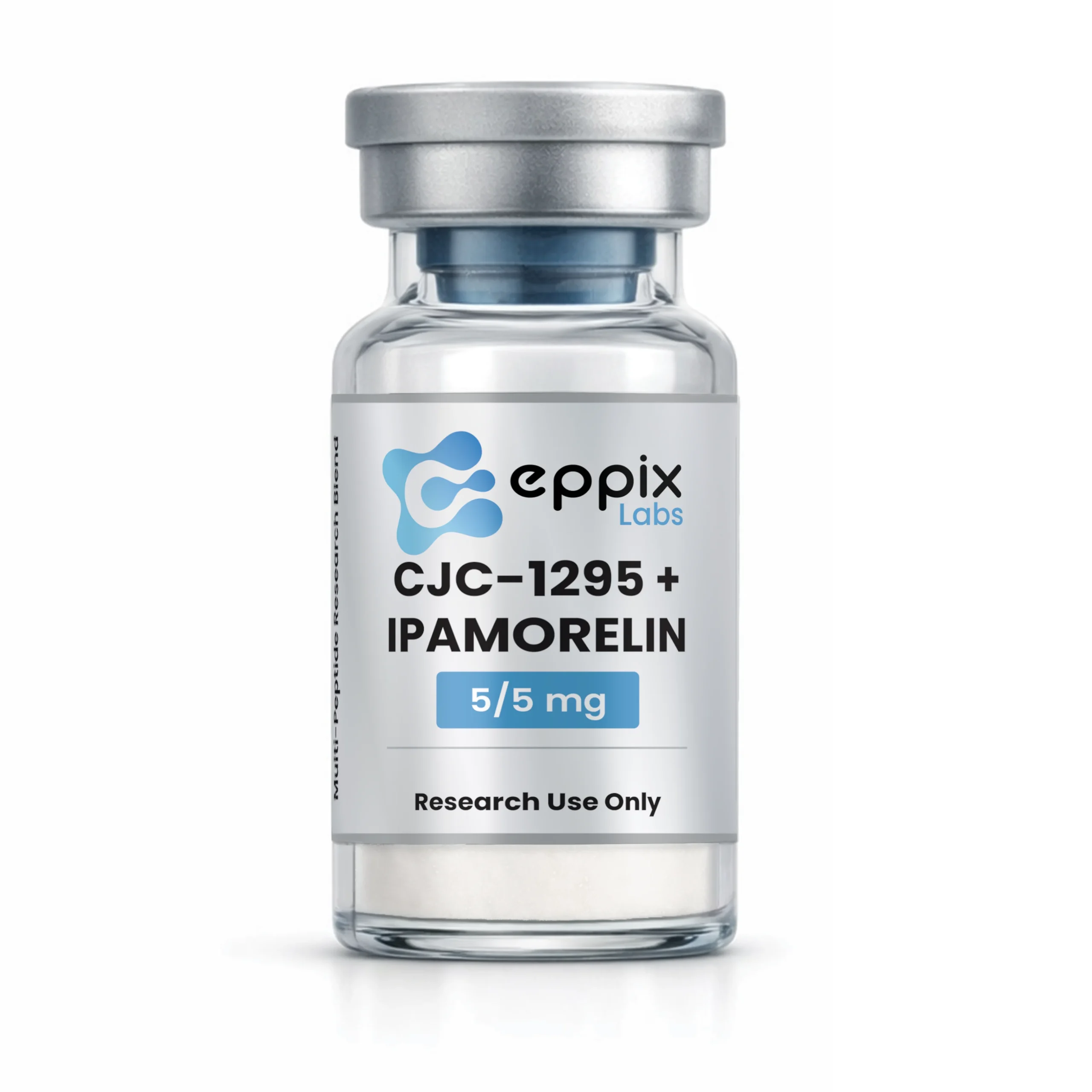
10mgDual GHRH / GHS-R Research Blend CJC-1295 + Ipamorelin is a dual-peptide research formulation combining a growth hormone–releasing hormone (GHRH) analogue with a selective ghrelin receptor (GHS-R1a) agonist. It is developed for controlled laboratory investigation involving hypothalamic-pituitary signaling systems.
From$59.99
What to check before buying blends compounds
Purity is half the number. A purity figure tells you what fraction of the powder in the vial is the compound on the label — it tells you nothing about how much powder is in the vial. A lot can assay at 99.8% purity and still be short against its labelled content.
Both numbers are published for every batch here: purity from HPLC, and measured mass against expected content. Match the batch code printed on the vial to the certificate before you rely on either.
Blends research peptides — common questions
- Why does a blend certificate look different?
- Because purity is defined for a single compound and a blend is a mixture. A blend report identifies and quantifies each component rather than issuing one area-percent figure for the vial. A blend advertised with a single purity number is reporting something that measurement does not produce.
- What is actually in GLOW and KLOW?
- GLOW combines GHK-Cu, BPC-157 and TB-500. KLOW is the same three plus KPV. Component amounts are printed on the product page and on the lot certificate, so what is in the vial can be checked rather than inferred from the name.
- When does a blend make more sense than single vials?
- When the research follows the combination as published. A blend is one vial and one fill, so it costs less than the components bought separately, but the ratio is fixed at manufacture. Work that varies one component against the others needs single vials.
- How is a blend lot verified?
- Each component is identified and quantified independently, and measured content is reported per component against that component’s labelled amount. The lot code on the vial matches the code on that report.